

 FLORA
FLORA
 SPACE
SPACE
 INTERSTELLAR
 BRIGHT MIRROR
 KUZ
KUZ
ExDivo FLORA 40K Disposable Vape
$ 14.99
$ 41.99
🥳 Free shipping on all orders of 30 or more.
🥳 Free shipping on all orders of 30 or more.
🥳 Free shipping on all orders of 30 or more.
🥳 Free shipping on all orders of 30 or more.
🥳 Free shipping on all orders of 30 or more.
🥳 Free shipping on all orders of 30 or more.
🥳 Free shipping on all orders of 30 or more.
🥳 Free shipping on all orders of 30 or more.
🥳 Free shipping on all orders of 30 or more.
🥳 Free shipping on all orders of 30 or more.
🥳 Free shipping on all orders of 30 or more.
🥳 Free shipping on all orders of 30 or more.
🥳 Free shipping on all orders of 30 or more.
🥳 Free shipping on all orders of 30 or more.
🥳 Free shipping on all orders of 30 or more.
🥳 Free shipping on all orders of 30 or more.
🥳 Free shipping on all orders of 30 or more.
🥳 Free shipping on all orders of 30 or more.
🥳 Free shipping on all orders of 30 or more.
🥳 Free shipping on all orders of 30 or more.

Yes—under current U.S. rules, you can bring a vape on a plane, but the device must stay with you or in your carry-on baggage. It cannot go in checked baggage. Protect it from accidental activation, keep spare lithium batteries in the cabin with their terminals protected, and do not use or charge the device during the flight. E-liquid in your carry-on must also follow the Transportation Security Administration's liquids rule.
That is the short answer. The details matter when a bag is checked at the gate, when you carry bottled e-liquid, or when an airline or destination has stricter rules. This guide explains the U.S. baseline for adults age 21 and older and gives you a practical packing checklist. It is not legal advice, and rules can change, so check your airline and destination again before departure.
| Item or action | Carry-on / on your person | Checked baggage | During the flight |
|---|---|---|---|
| Vape or e-cigarette | Allowed under the U.S. baseline; prevent accidental activation | Not allowed | Do not use or charge |
| Disposable vape | Same cabin-only rule | Not allowed | Do not use or charge |
| Removable or spare lithium battery | Cabin only; protect terminals individually | Not allowed | Do not charge |
| E-liquid bottle | Allowed within TSA's liquids limits | Generally allowed by TSA, but airline and destination rules may differ | Keep closed and stored |
| Damaged, defective, or recalled battery/device | Do not travel with it | Do not travel with it | Not applicable |
The Federal Aviation Administration's PackSafe guidance says electronic smoking devices must be carried on your person or in carry-on baggage and must not be packed in checked baggage. The FAA also requires travelers to take effective measures against accidental activation. The TSA's electronic-cigarette guidance gives the same carry-on-only direction for security screening.
Most vapes contain a lithium battery. A battery failure can create heat and fire, and a problem is easier for the crew to identify and respond to in the cabin than in the cargo hold. This is why the rule applies to different device formats, including disposables, pod systems, vape pens, and devices with removable cells.
The rule is about the device and its battery, not whether the product is new, empty, switched off, or still sealed in retail packaging. Putting a vape in a checked suitcase by mistake is still a packing error.
If you are unsure which battery arrangement your device uses, start with our guide to what is inside a vape and identify whether the battery is built in or removable. Do not open or dismantle a sealed disposable device to prepare it for travel.
Use this sequence before leaving home:
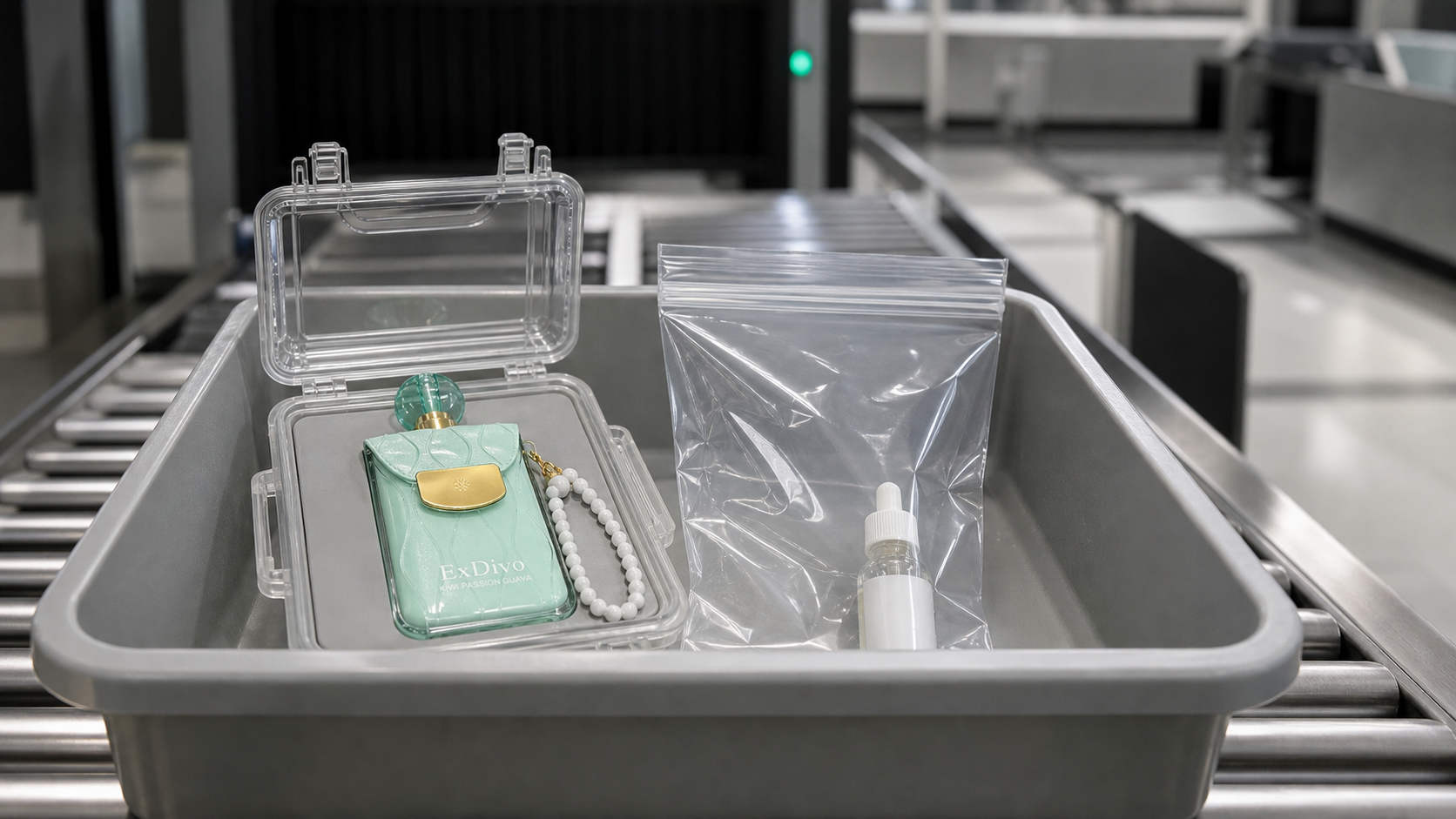
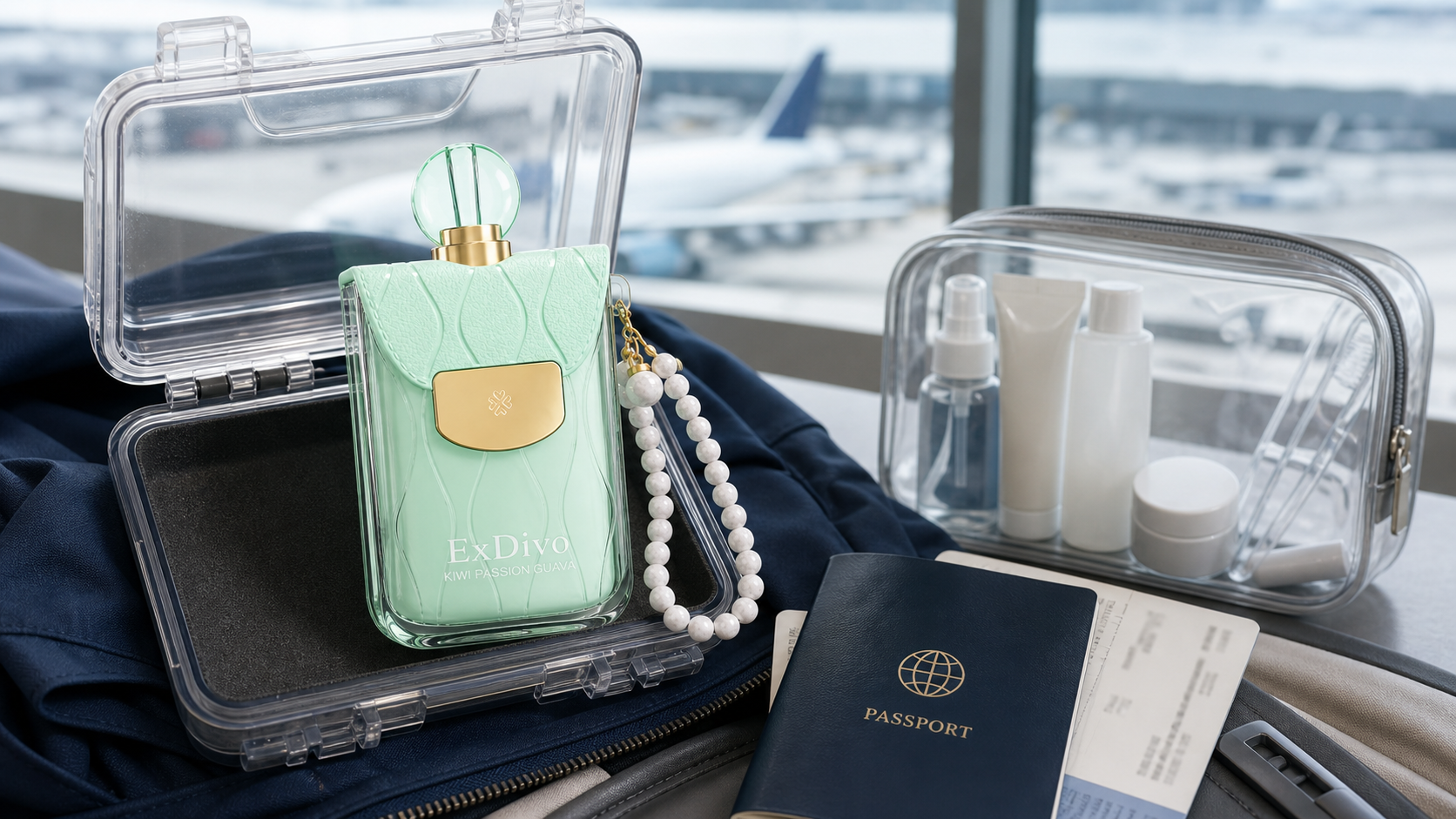
The ExDivo FLORA device shown in these illustrations is a real ExDivo product used to demonstrate the packing context. An image does not establish that a particular device is accepted by every carrier. Always check the label or product documentation for the exact battery specifications and follow the airline's instructions.
Yes, a disposable vape follows the same U.S. cabin-only rule as other electronic smoking devices. Keep it on your person or in your carry-on, protect it from accidental activation, and never put it in checked baggage.
Do not try to remove the built-in battery from a sealed disposable. If the device cannot be protected adequately, is damaged, or lacks clear product information needed by your airline, the prudent choice is not to travel with it. Airport security permission also does not override age restrictions, airline policies, or laws at your destination.
For a U.S. checkpoint, e-liquid in a carry-on follows the same 3-1-1 framework as other liquids. Each container must be 3.4 ounces (100 milliliters) or less, and carry-on liquid containers must fit in a single quart-size bag. TSA lists e-liquids as allowed in both carry-on and checked baggage, subject to the applicable liquid limits and other rules.
That does not mean every destination allows the liquid. Nicotine-product import limits, local possession rules, and airline policies are separate questions. For checked e-liquid, seal the cap and place the bottle in a leak-resistant secondary bag. Pressure changes can contribute to leaks, but do not overfill or modify a bottle in a way that damages its original closure.
The final decision at a checkpoint rests with the TSA officer. If a bottle is unlabeled, oversized, leaking, or otherwise raises a security concern, it may receive additional screening.
A carry-on bag can become checked baggage when overhead bins are full. Before handing it to airline staff, remove the vape, spare lithium batteries, and power banks and keep them with you in the cabin. The FAA's lithium-battery baggage guidance specifically tells passengers to remove these items when a carry-on is checked at the gate or planeside.
This is easier if you pack the device in a small protective case near the top of the bag rather than burying it under clothing. A compact personal item that will stay with you is often the simplest place for the protected device.
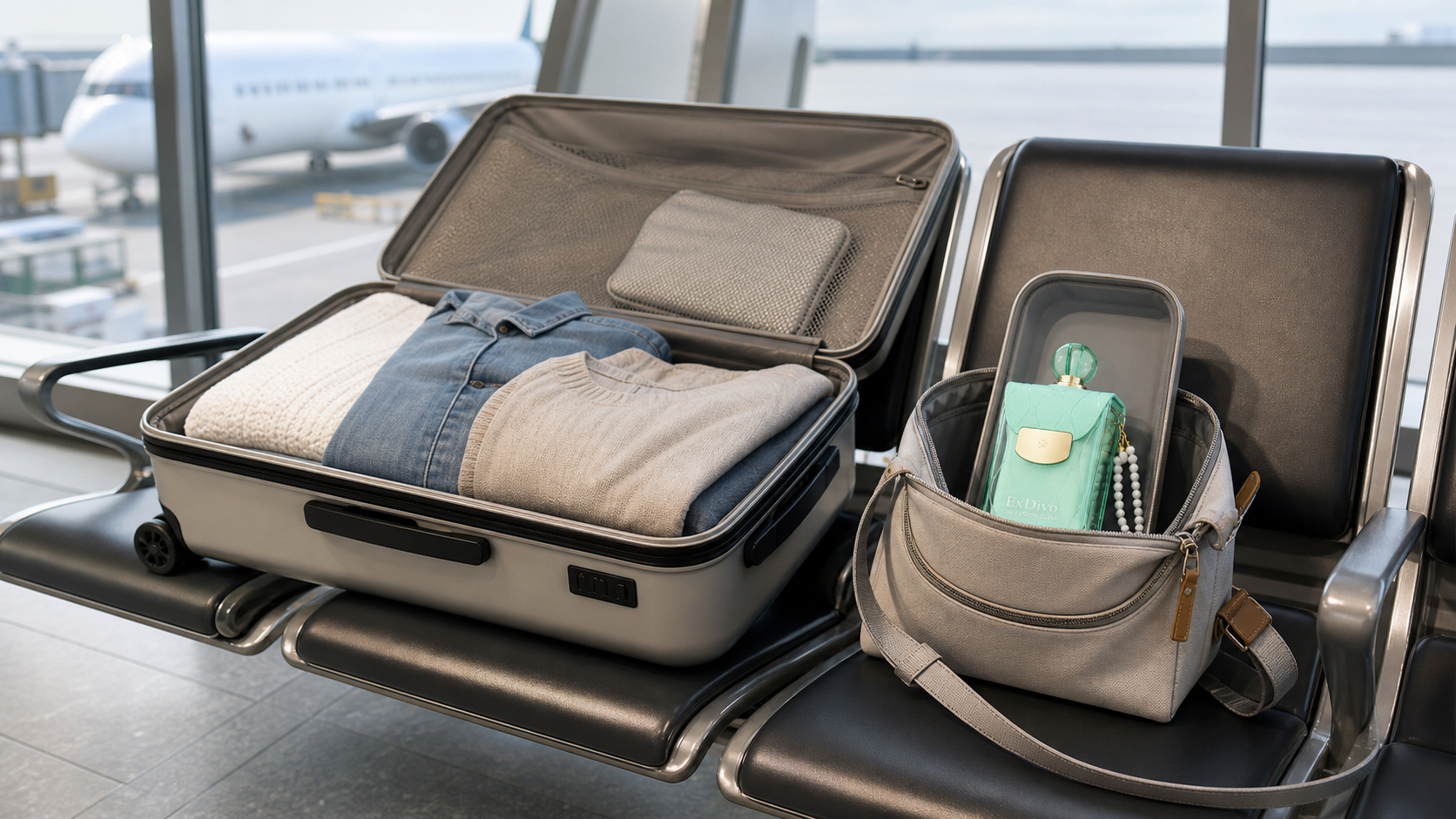
Not necessarily. TSA may inspect any item or ask you to remove it for additional screening, but there is no universal rule that every vape must be placed in a separate tray in the way large electronics sometimes are. Follow the officer's instructions at the checkpoint and keep the device accessible.
Do not hide or disguise a device. Pack it transparently and in accordance with the rules. TSA screening determines whether an item may pass the security checkpoint; it does not certify that possession or use is legal at your destination.
No. The FAA says passengers must not use or recharge e-cigarettes and similar devices aboard the aircraft. Keep the device stored for the entire flight. Do not connect it to a seat outlet, USB port, laptop, or power bank, even if the battery is low.
Charge at home with equipment appropriate for your device before leaving, then disconnect it for travel. Our vape charger guide explains why the connector fitting is not, by itself, proof that a charger is suitable.
If a device becomes hot, swells, emits an unusual odor, leaks, sparks, or produces smoke, do not handle it casually or place it back in a bag. Tell a crew member immediately and follow crew instructions.
FAA guidance generally limits consumer lithium-ion batteries to a rating of no more than 100 watt-hours unless a specific exception applies. Most small vape batteries are far below that threshold, but do not guess from the physical size of the device. Look for the watt-hour rating or the voltage and amp-hour information in the product documentation.
Airlines may also limit how many electronic smoking devices one passenger can carry. If the battery rating is unclear or you plan to carry multiple devices or spare cells, contact the airline before traveling. A screenshot of a retailer listing is less reliable than the manufacturer's label or documentation.
TSA and FAA rules cover the U.S. security and aviation baseline. They do not make a vape legal everywhere. A destination or transit country may restrict or prohibit the import, possession, sale, or use of vaping products. Some airports also restrict vaping to designated areas or prohibit it throughout the property.
Before an international trip, check all four layers:
Use official government, airport, and airline sources where possible. A forum answer can be useful for identifying a question, but it should not replace the current rule.
For broader device-handling basics, see how to vape properly. Adults comparing device formats can also review our guide to different types of e-cigarettes. These resources are educational, not a substitute for airline instructions.
Yes, under the U.S. baseline, a personal item that stays in the cabin is an appropriate place for a protected vape. Make sure the device cannot activate accidentally and that the bag will not be checked.
Yes, as long as the suitcase remains carry-on baggage. If the airline checks it at the gate, remove the vape and spare batteries before handing over the bag.
No. Turning it off does not change the FAA cabin-only rule for electronic smoking devices.
FAA guidance tells travelers to check with their airline for limits on the number of devices. Ask the carrier directly before packing multiple devices.
Only if checkpoint instructions or a TSA officer ask you to do so. Keep it accessible and pack it openly in a protective case.
Do not vape on the aircraft. Airport use rules vary, and many airports allow vaping only in designated areas or prohibit it indoors. Check posted airport rules rather than assuming a bathroom is permitted.
No. ExDivo content is intended for legal-age adults. In the United States, federal law sets 21 as the minimum age for retailers to sell tobacco products, including e-cigarettes and e-liquids. Adults who have never used tobacco or nicotine products should not start.
You can bring a vape on a plane under the U.S. baseline, but only in the cabin: on your person or in carry-on baggage. Protect it from activation, keep spare batteries individually protected, follow TSA's liquid limit for e-liquid, remove the device if a bag is gate checked, and never use or charge it during the flight. Then verify the airline and destination rules, because they can be stricter than the U.S. security baseline.
Rules reviewed July 23, 2026. Primary sources: FAA PackSafe—Electronic Cigarettes and Vaping Devices, FAA Lithium Batteries in Baggage, TSA Electronic Cigarettes and Vaping Devices, TSA E-Liquids, and FDA Tobacco 21.